
- Home
- Programmes
- Larviciding
Larval source management
Stopping mosquitoes before they fly
Three of a mosquito’s four life stages happen in water. Larviciding treats breeding sites so eggs, larvae and pupae never become biting adults.
The life cycle
Egg, larva, pupa, adult
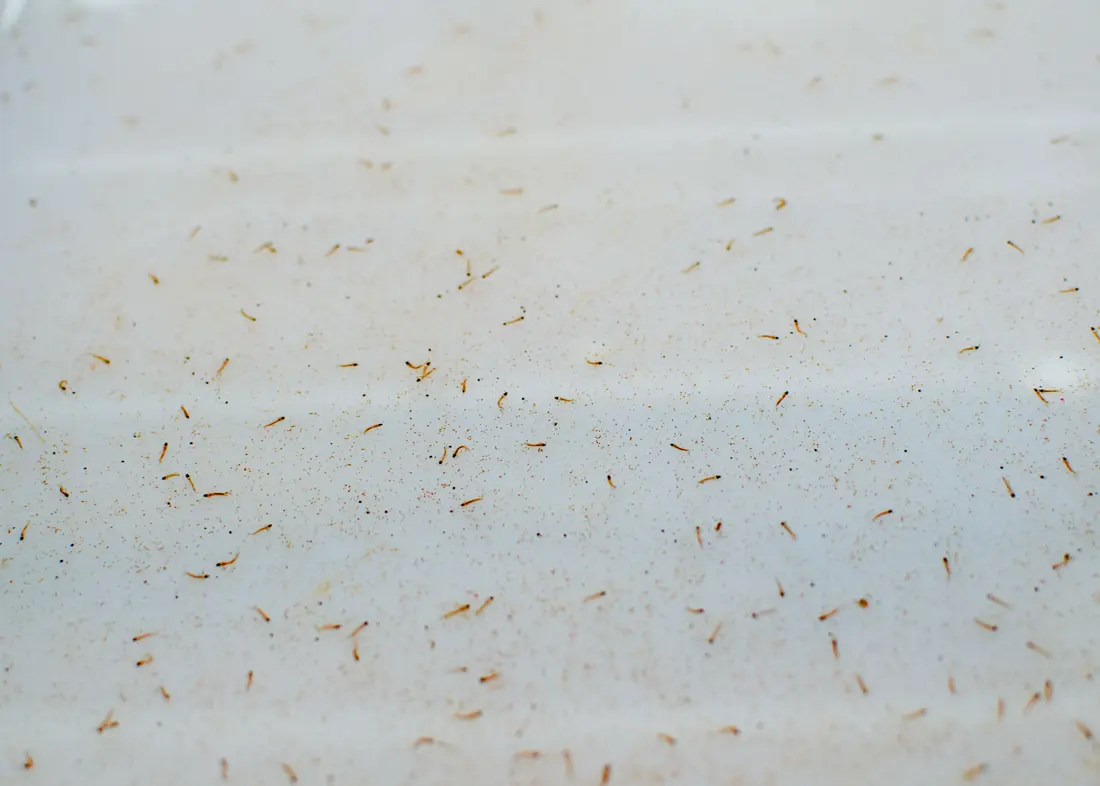
Malaria is passed on by the bite of an infected female Anopheles mosquito. The first three stages of its life are aquatic; only the adult lives on land.
Larval source management (LSM) is the targeted management of these water habitats, so fewer larvae and pupae complete their development.
How we do it
Four ways to manage breeding sites
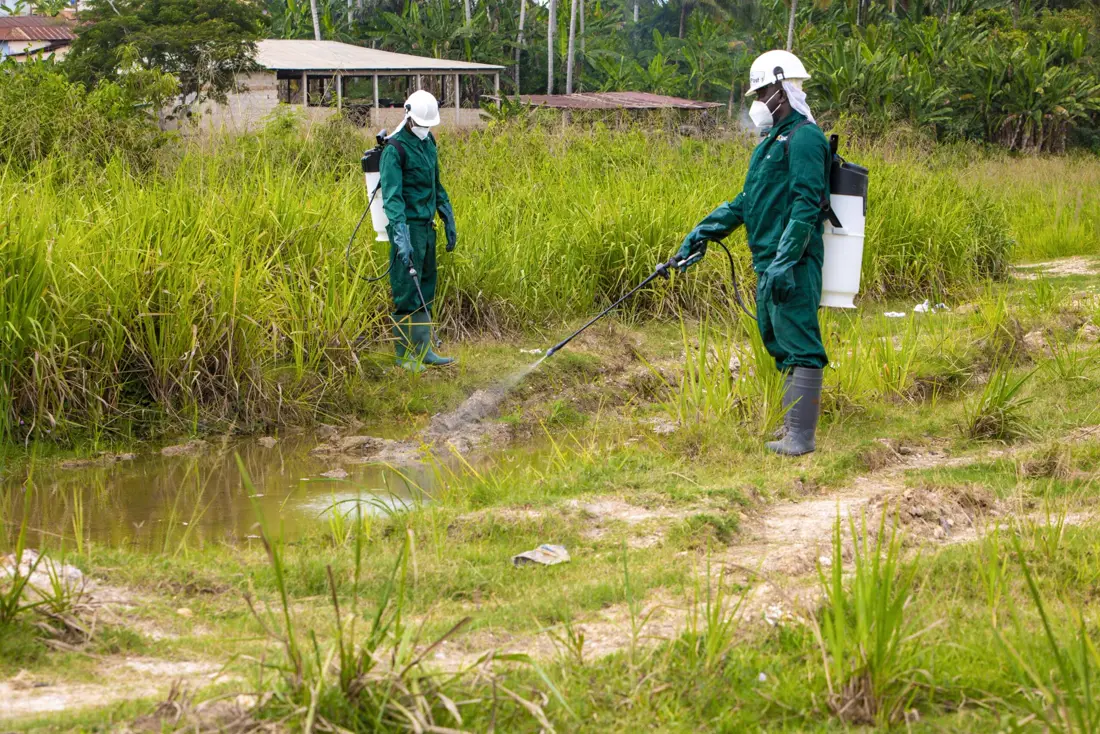
Larviciding complements our core intervention, indoor residual spraying, and insecticide-treated nets. We use Bacillus thuringiensis israelensis (Bti), a biological larvicide.
- Permanent
Habitat modification
A lasting change to the environment, such as land reclamation.
- Recurring
Habitat manipulation
Repeated work such as flushing streams.
- Natural
Biological control
Introducing natural predators into water bodies.
- Treatment
Larviciding
Regular application of biological or chemical insecticides to water.
Precision
Every breeding site is geotagged
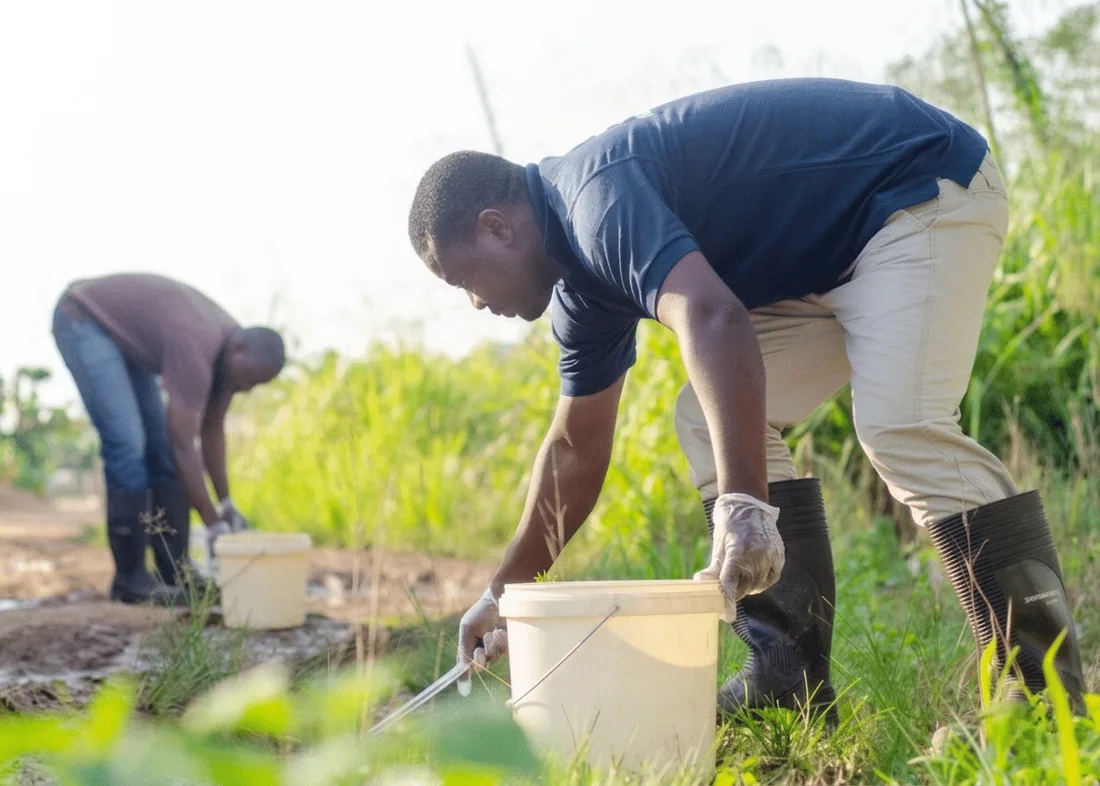
Teams tag and describe potential breeding sites with the GhanaPost GPS app and map them in Google Earth. That tells us how many people and how much larvicide each round needs, and makes it quick to find sites again for re-treatment.
Entomological monitoring tracks larval and adult mosquito numbers over time, so we can see whether treatment is working.
More programmes
Our other work
Help us reach malaria-free communities
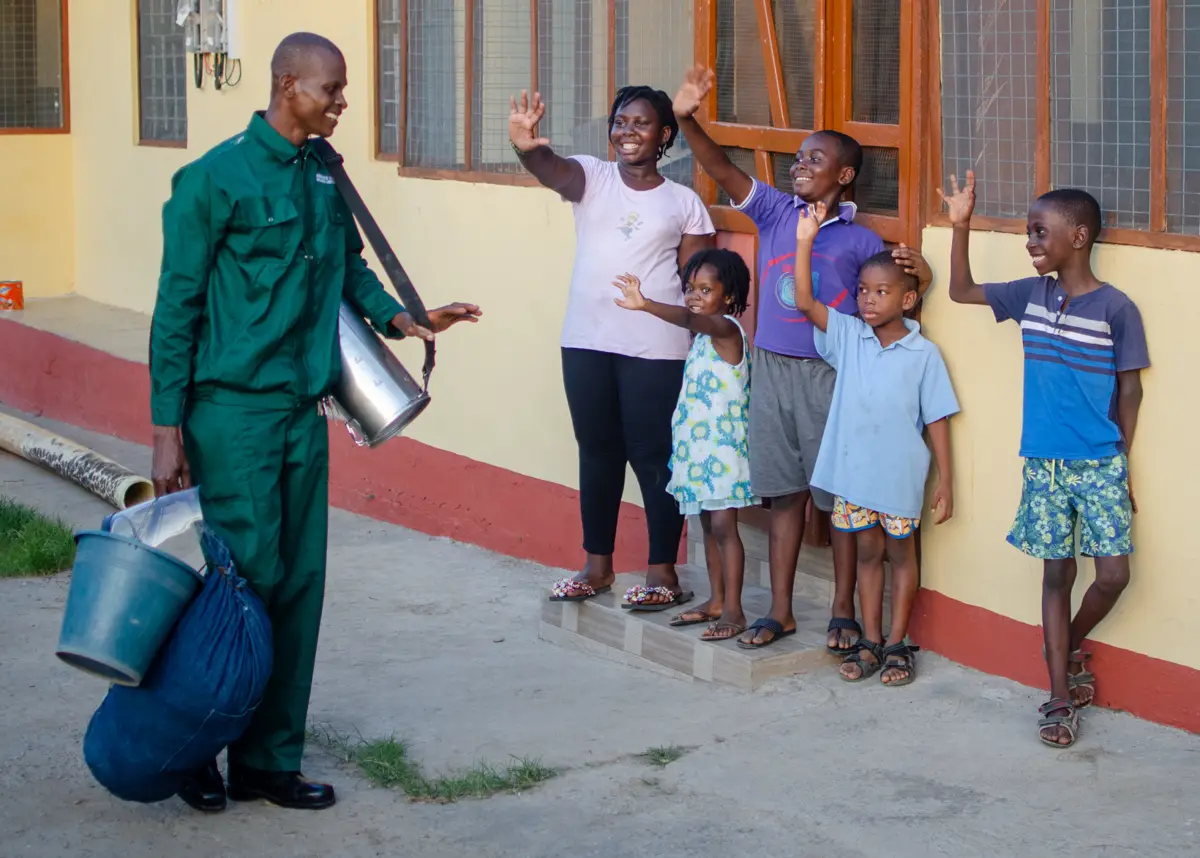
Volunteer in your community, partner with us on a programme, or see our open position.